

Selecting an appropriate underwater drone requires evaluating multiple factors to ensure it aligns with your needs and budget. Below are recommended steps for choosing an underwater drone:
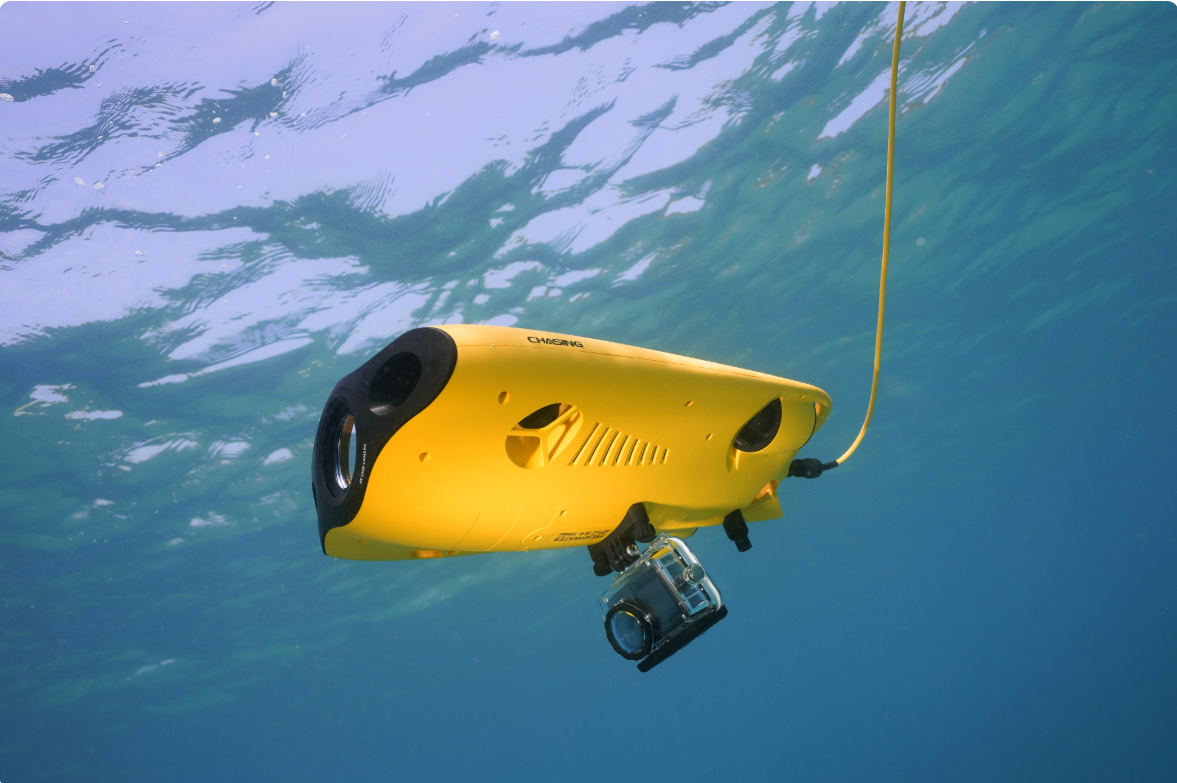
1.Clarify Usage and Requirements: First, define the purpose of purchasing an underwater drone. Is it for entertainment, capturing underwater photos and videos, or conducting professional underwater surveys or scientific research? Different applications demand different types of underwater drones. For instance, scientific research may require a drone equipped with high-precision sensors and data/sample collection capabilities, while underwater photography may call for a drone with a high-definition camera. Therefore, before making a purchase, clearly outline your usage and requirements to select the most suitable model.
2.Set a Budget: Determine your budget range. Underwater drones span a wide price spectrum, from affordable consumer-grade models to high-end professional ones. Your budget will largely influence the available models and features. Based on your budget, strike the best balance between performance and quality—avoid blindly pursuing high performance while ignoring costs.
3.Evaluate Performance and Specifications: Consider the performance and specifications you need, including the underwater drone’s size, operating depth, battery life, payload capacity, light brightness, and camera quality. These parameters are crucial for determining whether a drone meets your specific needs. For example, if you need to conduct deep-water exploration tasks, you should choose a drone with a large operating depth and long battery life; if the goal is simply underwater shooting, requirements for cable length and operating depth will be relatively lower, while demands for camera clarity and stability will be higher.
4.Assess Portability and Convenience: If you plan to frequently carry the underwater drone for travel or need to deploy it quickly for work, a lightweight, easy-to-carry, and compact design will likely be more appealing to you.
5.Examine Camera and Sensors: The camera is a key component of an underwater drone. If you need to take photos or videos, evaluate the camera’s quality, resolution, and lens stability. Additionally, check whether the drone supports other sensors, such as water quality sensors or sonar.
6.Check Maneuverability: An underwater drone’s maneuverability is tied to its stability. Consider how easy the drone is to operate, including whether it can hover or move steadily. The layout and number of motors, as well as flight control algorithms, are critical to ensuring the drone maintains stability in various postures and during movement.
7.Review Control Methods: In any application scenario, an underwater drone needs precise control capabilities to ensure smooth shooting and capture of key moments. Underwater drones are typically controlled via a remote controller or a smartphone app. Ensure you are comfortable with the control method, and review the corresponding user interface and app.
8.Check Battery Life and Charging Time: Look into the underwater drone’s battery life and the time required for charging. Longer battery life is generally preferred, but also consider the availability of spare batteries. Both spare batteries and AC power supply can extend the drone’s operating time.
9.Research Brands and Reviews: Explore underwater drones from different brands, and read user reviews and professional evaluations to learn about others’ experiences and recommendations. Drones from well-known brands with good customer service are usually more reliable, and their performance and quality are better guaranteed.
10.Consider Maintenance and Support: Ensure you can easily access maintenance and support services. Choose a drone that is easy to repair and maintain, so problems can be resolved quickly and the drone remains in good condition. Underwater drones with a modular design have precise calculations and control over the connection and coordination between components, offering high reliability and convenient maintenance.
Finally, do not forget to regularly maintain and service your underwater drone to ensure its performance and lifespan. Choosing an underwater drone that fits your needs is an important decision—carefully consider various factors to find the best one for you.
