

In March 2026, Qianxing Innovation, a member enterprise of Shenzhen Strategic Emerging Industries Association, announced the completion of a nearly 100 million yuan Series C financing, led by Liwan Capital. Prior to this, institutions including Shenzhen Venture Capital, Nanshan Strategic Emerging Industries Investment, and Investment Holding Donghai have successively invested in the company.
Why has an underwater robotics enterprise continued to attract capital favor? The answer lies in its team background, technological roadmap and industrial layout.
Three former Huawei veterans have ventured into the "deep water area" and are capable of exploring the depths of the oceans.
The story of Qianxing Innovation began with three former Huawei employees.
Zhang Xun, CEO of the company, was once a senior expert at Huawei's Core Algorithm Department, with more than eight years of in-depth experience in robot automatic control and algorithm optimization. Zhou Chang根 served as Minister of Quality Operations Department of Huawei Japan Region. Yang Yang was a former project manager of HiSilicon mobile phone chips at Huawei.
Transitioning from the communications industry to underwater robotics seems like a huge leap, yet they share the same underlying logic. The Huawei background has endowed the team with strong productization capabilities, supply chain management experience and algorithm accumulation — which are exactly the key elements for underwater robots to move from laboratories to commercial implementation.
Today, Qianxing Innovation's core team has expanded to over 200 members, most of whom come from top enterprises such as Huawei, BYD, CSIC, LG and Foxconn. The company has built a complete technological matrix covering underwater communication, underwater vehicle design, power propulsion, navigation and control. Up to now, the company holds more than 200 invention patents and has been recognized as a national specialized, refined, differential and innovative "Little Giant" enterprise.
Dual-driven by industry and consumer markets, building an extremely high barrier
The underwater robotics industry faces a dilemma: industrial-grade products require high reliability and powerful operational capabilities, yet boast a relatively limited market size; consumer-grade products feature huge market potential but impose stringent requirements on cost control and mass production capacity. Most enterprises can only choose one of the two.
Chasing Innovation has taken a more challenging path — dual-driven development integrating industry and consumer markets.
This means the company must simultaneously meet the reliability standards for heavy industrial scenarios, while possessing the cost control and mass production capabilities required for consumer-grade products. It creates an extremely high industry barrier in terms of supply chain integration, technological platformization and multi-channel operation. Nevertheless, overcoming this barrier will generate distinctive competitive advantages.
At present, Chasing Innovation’s product portfolio covers three major sectors: industrial underwater robots, consumer underwater drones and pool cleaning robots. It is the only domestic enterprise dedicated to all three sectors simultaneously.
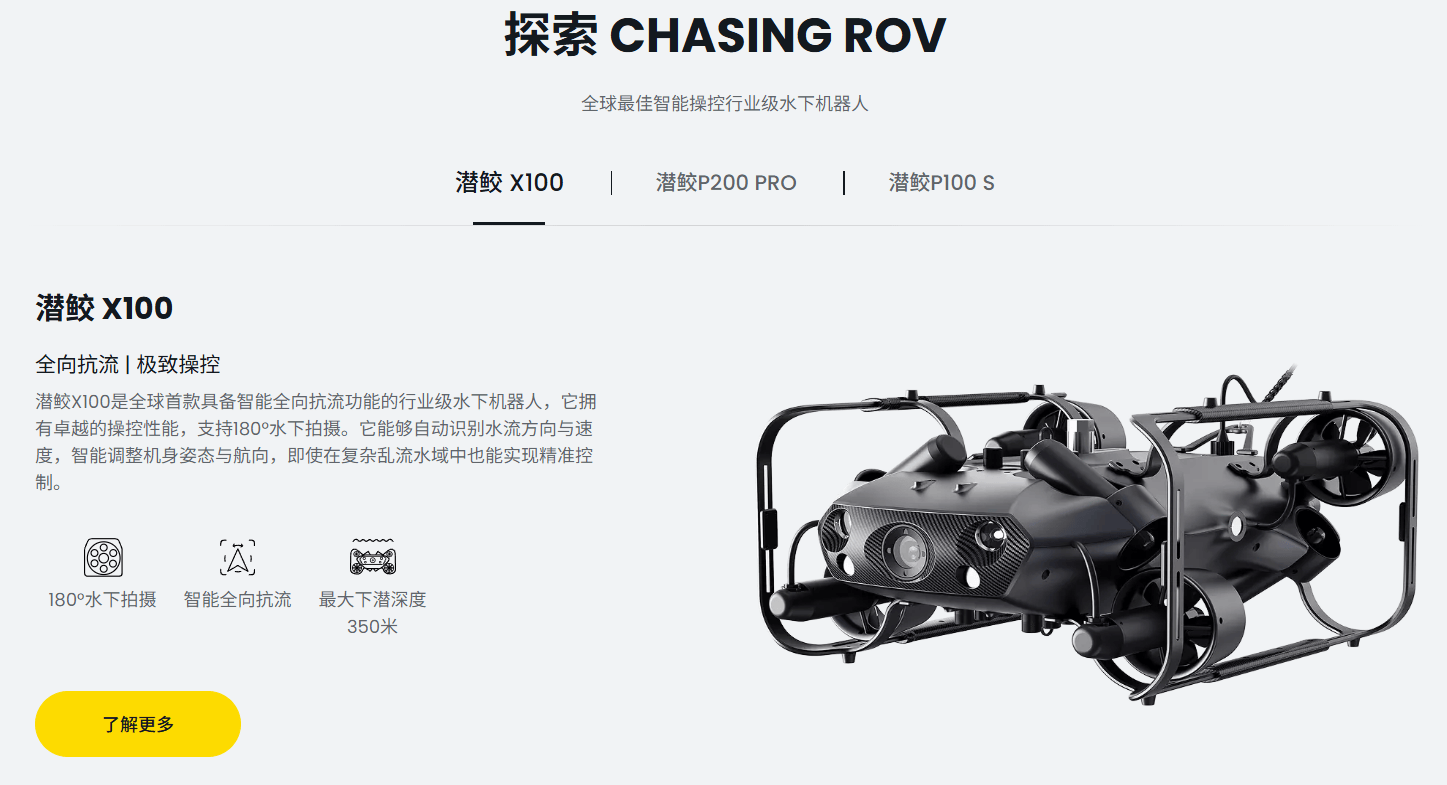
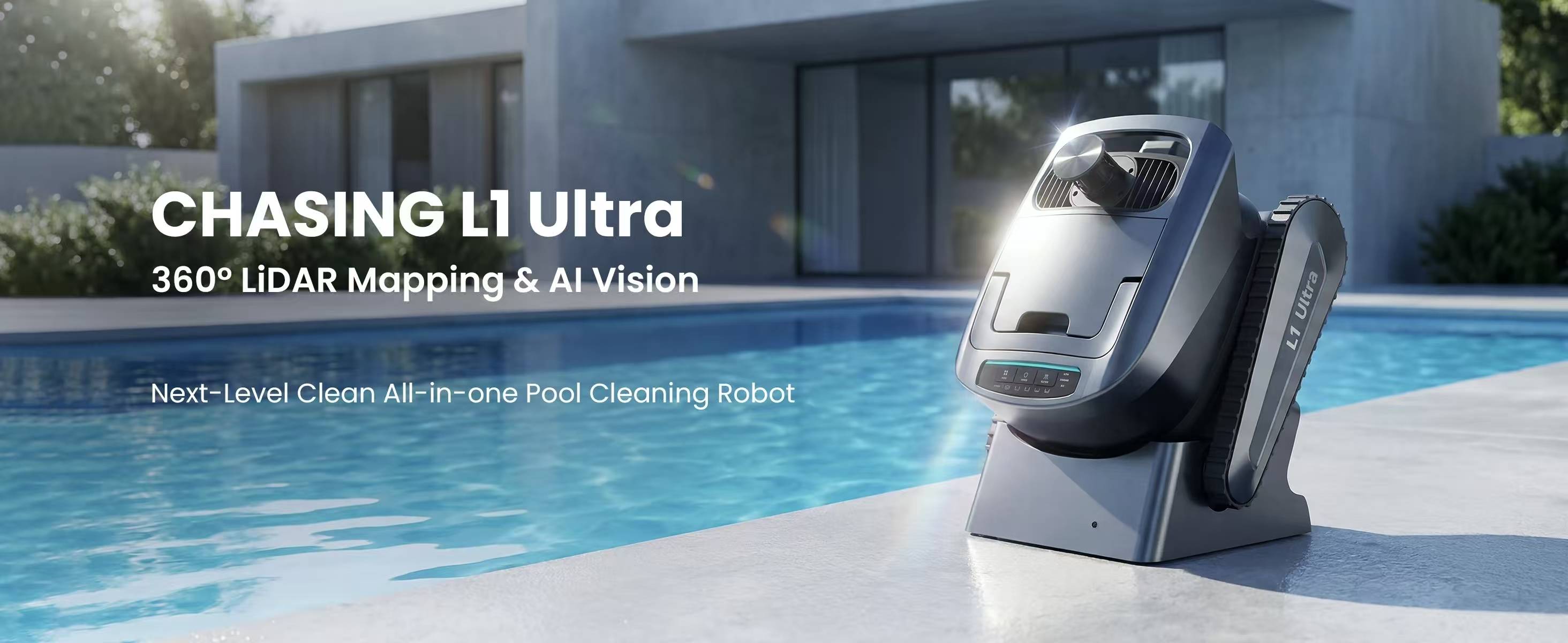
Among its flagship products, multiple models are world-first innovations: the Qijiao X100, the world’s first intelligent omnidirectional current-resistant underwater robot with a diving depth of 350 meters, capable of stable operation in strong current environments; the L1 Ultra, the world’s first intelligent pool cleaning robot integrated with LiDAR and AI vision, which applies autonomous driving technologies to pool cleaning scenarios in a downscaled manner.
Realizing full industrial chain capabilities from R&D to mass production
In January 2026, the L1 Ultra, jointly developed by Chasing Innovation and Luxshare Precision subsidiary Luxview Innovation, was officially rolled off the production line and delivered. This marks the official entry of its consumer products into the large-scale mass production stage.
One month later, the Zhanjiang Chikan Industrial Base was officially opened. The completion of this base signifies that Chasing Innovation has fully integrated the entire industrial chain of "research and development — pilot test — mass production — application". A complete industrial closed loop is taking shape, stretching from the R&D center in Shenzhen, through the manufacturing base in Zhanjiang, to the global sales network.
For a hard technology enterprise, possessing independently controllable mass production capabilities means it can not only develop products, but also reduce costs and stabilize quality. This is precisely the insurmountable threshold for many underwater robotics enterprises founded by research teams.
Going global and dominating half of multiple overseas markets
While gaining a firm foothold in the Chinese market, Chasing Innovation has long set its sights on the world.
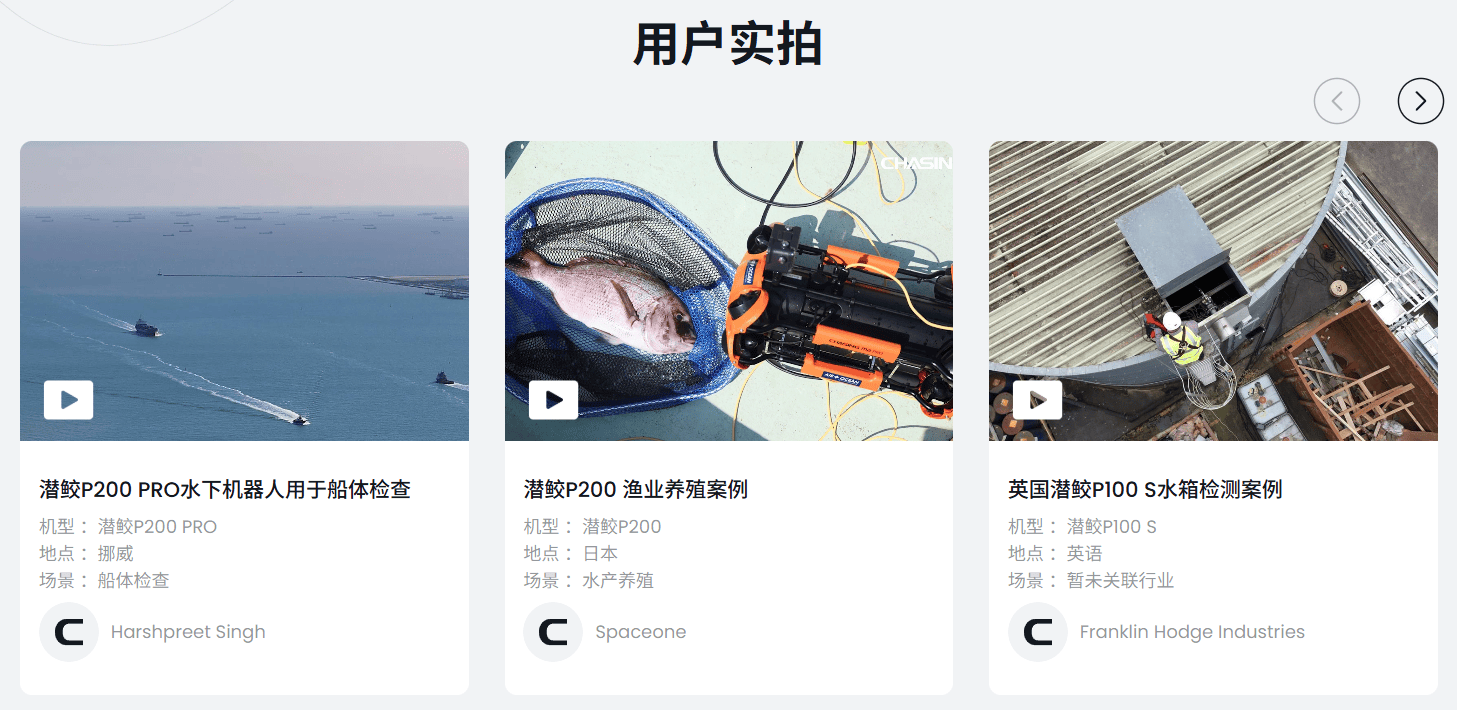
At present, its products cover more than 100 countries and regions worldwide, and are widely used in maritime applications, emergency rescue, fishery breeding, water conservancy and hydropower, hull inspection, scientific research and exploration, and other fields. In key markets such as Northern Europe, South America and Japan, the market share of some product lines has exceeded 50%.
This means that this Shenzhen-based enterprise not only benefits from domestic policy dividends but also competes head-on with established European and American enterprises in the global market. Similar to consumer drones, underwater robots are emerging as a new calling card for Chinese intelligent equipment going global.
Riding the trend, yet aiming higher beyond it
Qianxing Innovation's Series C financing coincides with the in-depth advancement of China's national marine power strategy.
The government work reports for 2025 and 2026 have listed deep-sea science and technology as well as the marine industry as key development priorities for two consecutive years. The proposals for the 15th Five-Year Plan also clearly call for promoting high-quality development of the marine economy. Sustained policy dividends have paved a fast track for the development of the underwater robot industry.
What really attracts capital investment is not just the booming trend, but the company's own moat. The entrepreneurial heritage of three former Huawei executives, the dual-drive strategy of "industrial applications + consumer products", the full industrial chain capabilities from R&D to mass production, and global market expansion — these are the underlying logic that keeps Qianxing Innovation favored by capital.
According to QYResearch data, the global underwater robot market reached USD 7.85 billion in 2024, with China accounting for USD 2.35 billion. The Forward-looking Industry Research Institute forecasts that China's market size will exceed USD 10 billion by 2030, recording a compound annual growth rate of over 28%.
The market boasts enormous potential and long-term growth prospects. For Qianxing Innovation, its nearly 100-million-yuan Series C financing is merely a new starting point. Whether it can evolve from a "hidden underwater giant" into a true "DJI of the underwater sector" hinges not only on technological strength, but also on its capabilities in continuous product iteration, supply chain management and global market operation.
